


Paul Pacey
Article · 9 min read

AI in International School Marketing: The Good, the Bad and the Ugly

Why schools are right to be wary of AI, why they’re wrong to give up on it, and how to tell the difference.

Paul PaceyPhotographer to international schools · Prague

When I first started using AI in my editing, it felt like a gift. Cables snaking across a classroom floor, a trash bin in the corner of an otherwise perfect frame, a horizontal image that needed to work as a vertical story: problems that once cost me hours disappeared in seconds.

Then I discovered video generation, and I became euphoric at the possibilities. A school could hire me for a photo shoot and walk away with a polished, full-scale video campaign—built from those same images, in the exact same aesthetic, for a fraction of the time and cost. Combined with my editing and sound design skills, I could become a true one-stop shop, delivering a product that rivaled—or surpassed—what dedicated video production companies could offer.

Then came the fear: If a school could train an AI on my style—a visual signature I’ve spent 15 years refining—why would they ever need to hire me again?

Today, I’m seeing something I didn’t expect: the same schools that were excited at the possibilities less than a year ago are now stepping back from AI content altogether. As much as part of me finds that reassuring, I’m also more than a little disappointed. In their rush to mitigate risk, it feels like schools might be throwing the baby out with the bathwater.

Perhaps AI is neither the existential threat nor the miracle cure it first appeared to be. Used carelessly, it undermines the exact authenticity school marketing exists to build. Used intentionally, it still offers real magic. This article is about telling the difference.

The good: what AI already does well

Start with the unglamorous wins, because they’re real.

  • Cleaning up the frame. Cables, bins, parked cars and outdated signage, gone in seconds.
  • Reformatting. Extending a background so a horizontal image works as a vertical story or a wide web banner.
  • Protecting privacy. Removing or obscuring a student in the background whose family hasn’t given consent. Here, AI solves a consent problem instead of creating one.
  • Restoring the archive. Bringing faded photographs back to life for an anniversary or a heritage page.
  • Planning. Mocking up a concept so a leadership team can approve an idea before a single frame is shot.
  • Managing the library. Tagging, captions and alt text that make hundreds of images searchable by theme, season or year group.
  • Showing what doesn’t exist yet. A clearly labeled “artist’s impression” of a new building.
  • Bringing images to life. Turning still photographs into short, moving moments.

This last point deserves an asterisk, because it is precisely where the slope starts to get slippery. In its current form, AI-generated motion is still hit-or-miss, but when it lands, it is almost impossible to distinguish from reality. In my world, I’ve learned this represents both the greatest opportunity and the greatest threat of our time.

Just as I thought I had found the keys to the kingdom, I had a rude awakening.

The bad: the line I didn’t see

The moment I understood what was really at stake came from a client I’d worked with for more than a decade. I’d spent days on a sample reel that brought some of my favorite images from their shoot to life, and I was proud of it. I still am. I sent it expecting delight.

What came back was alarm, and they were right to raise it. I had been thinking like a creative. They were thinking like guardians. Those weren’t just my images; they were their students, now moving in ways no parent had agreed to, in a video the school hadn’t asked for. However beautiful the result, I had stepped over a line I hadn’t known was there.

That’s the part of AI that rarely makes the headlines. The technology was never the problem. Consent was.
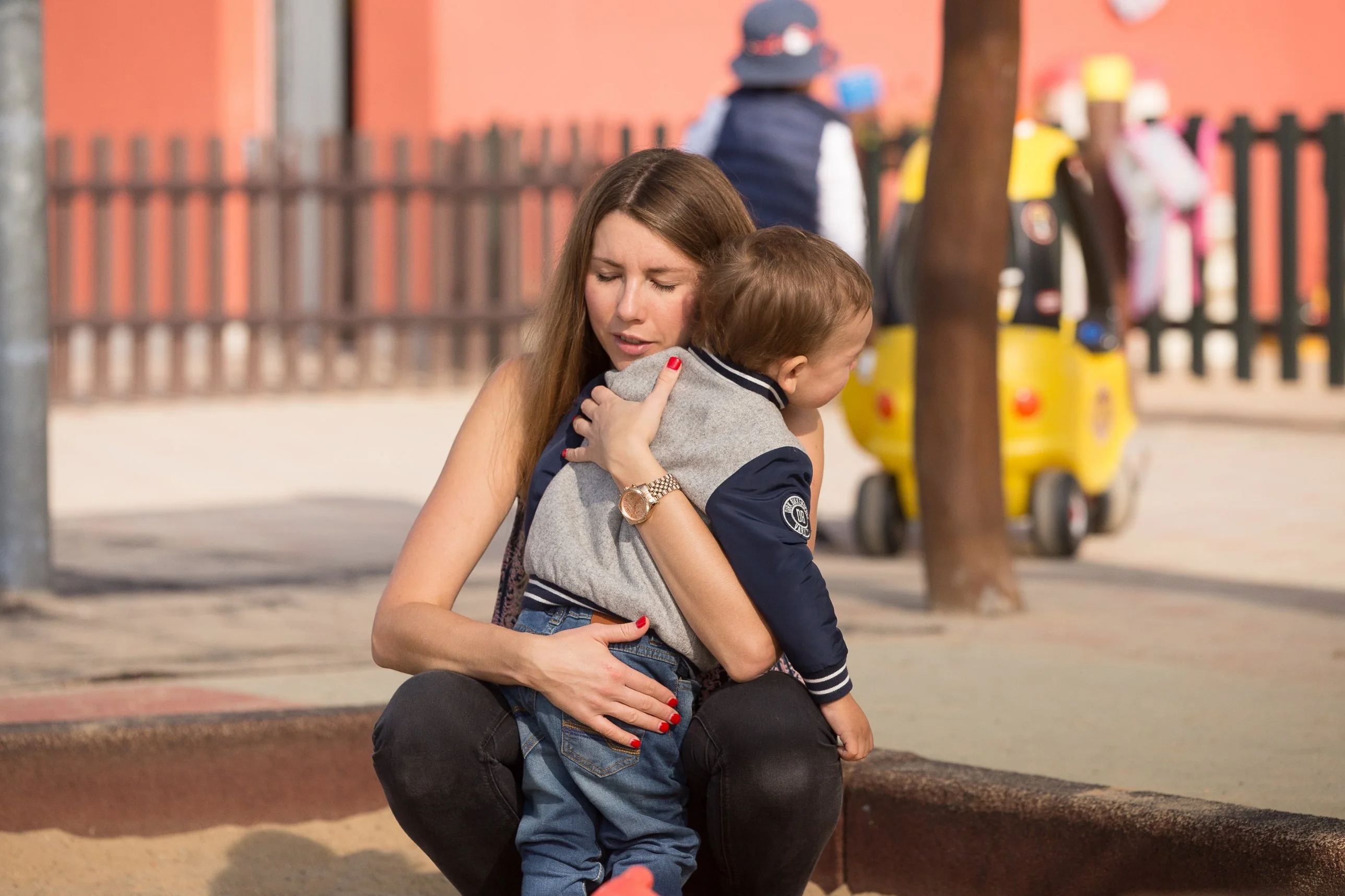
I had been thinking like a creative. They were thinking like guardians.

What the rules now say

The law has caught up faster than most of us expected. Here’s where things stand as of October 2026. It’s a general overview, not legal advice, so check anything specific with your data protection officer or legal team.

  • Labeling is now mandatory in the EU. Since August 2, 2026, the EU AI Act has required anyone who publishes a “deepfake” to disclose that it was generated or manipulated by AI (Legalithm).
  • “Deepfake” means more than you think. It isn’t limited to face swaps. It covers realistic AI-made or AI-altered images, audio or video that resemble real people, places or events and could pass as authentic (Davis+Gilbert). Animating a real photograph of a real student falls squarely inside it.
  • Advertising gets little relief. There’s a lighter regime for evidently artistic works, but the European Commission’s guidelines treat it as very narrow for advertising (Bird & Bird).
  • Your photo consent probably doesn’t cover it. Most consent forms cover photographing students and using the images in marketing. Animating a child’s likeness with AI is a different use, and it needs consent that names it. Data protection authorities around the world have made clear that realistic AI images of identifiable people, especially children, are personal data (GRC Report).
  • Enforcement is national and complaint-driven. Each EU country enforces the labeling rules, with fines of up to €15 million or 3% of turnover (Responsible AI Platform). Early enforcement has been slow, but anyone can complain: a parent, a competitor, a journalist.
  • Outside the EU, details differ. Switzerland has decided against a specific deepfake law (Swissinfo), and the UK isn’t covered by the EU Act. Data protection rules on children’s images apply everywhere.

The label problem

Which brings me back to my reel. I’d stand by it today. Because I made it before the new rules took effect, it doesn’t legally need a label. But if I made the same reel now, it would, and I know how that label would be read: fake. To me, the reel shows real children, real feeling and real moments, only in motion. A label tells you how something was made, not whether it’s true to what happened.

A real campus from one of my shoots. Motion and changing light added with AI.
A label tells you how something was made, not whether it’s true to what happened.

To be clear about what that reel did and didn’t do: every smile in it was real, and every moment happened. But I can’t pretend the AI invented nothing. Movement needs something the camera never saw: a head turns, a glance lands on a friend, a laugh unfolds over two seconds. The feeling is real; the motion is the AI’s best interpretation of it. So here’s the question I keep coming back to: when a photo starts to move, how much can AI interpret before it’s no longer the moment that happened? I’m not sure there’s one right answer, and a parent seeing their child move in a way no camera captured may draw that line very differently than I would.
The ugly: the authenticity contradiction

Every school I’ve worked with says some version of the same thing: we value authenticity. Our community is real. Come and see for yourself. So here’s the question every school should ask before publishing AI imagery: how can you say you value authenticity, then present your school with images that aren’t real?

  • Invented students. On LinkedIn, I followed a long discussion about an AI tool marketed to schools that “anonymizes” students by replacing their faces with generated ones. Commenters were appalled that the results looked like idealized “poster children.” Every shoot involves casting; we photograph the students who shine in front of a camera, and there’s nothing wrong with that. But choosing real students who photograph well is very different from replacing them with students who don’t exist. The first shows your community at its best. The second shows a community you don’t have.
  • The label undermines the proof. Parents look at your photos for evidence of what life at your school is really like. An “AI-generated” label tells them that what they’re looking at isn’t evidence.
  • Everything starts to look the same. AI learns from what already exists, so it drifts toward the average. Schools already struggle to stand apart; generated imagery makes it harder.
  • The safeguarding climate. Parents are hearing about school photos being taken from websites and manipulated with AI (TechRound). In that climate, “we used AI on your child’s photo” is a hard sentence to say, however good your intentions.

Keeping the magic

The answer isn’t to abandon AI. It’s to move it.

Behind the camera, everything in “the good” list above is still open to you. Those uses save time, protect students and mislead no one.

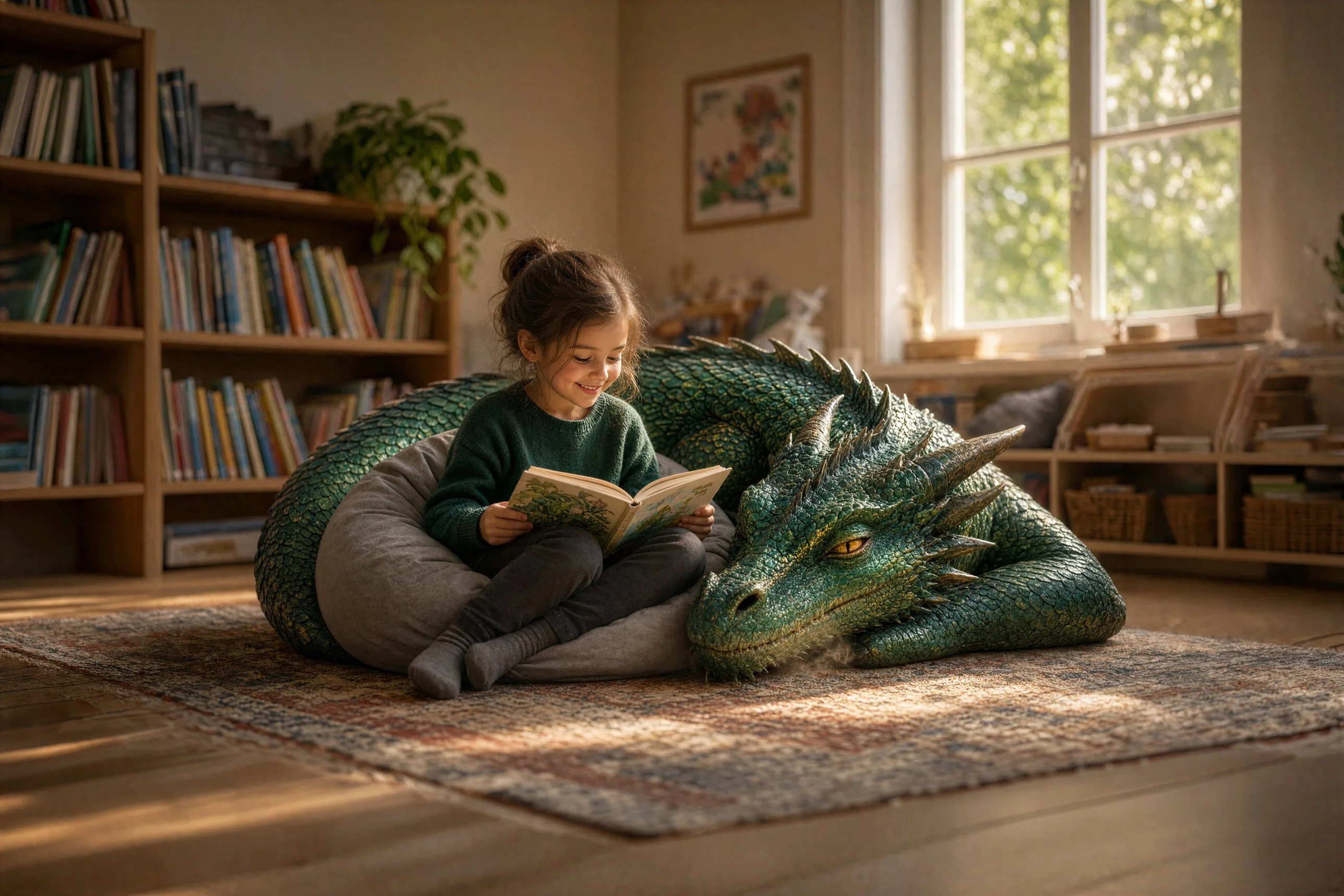
In front of the camera, one of the most exciting opportunities sits where the rules are kindest: content that is obviously not real. Picture a Primary student learning about the Stone Age who drifts into a daydream and finds herself in a prehistoric cave. Or a lesson on the planets that ends with a student standing on Mars. Nobody thinks it actually happened, so it isn’t pretending to be real. What it shows is true: what a great lesson does to a child’s imagination. And it would cut straight through the sea of identical corridor-and-classroom content most schools publish.

The fantasy is the hook.
The real story is the payoff.

To do it well:

  • Keep the child real; let AI build the world. Film or photograph the real student and the real wonder, then place them in an AI-generated environment. The child’s face and emotion are never synthesized. You’ll still need parental consent for the use, and should check with your legal team whether a label applies, but you’re on far firmer ground.
  • Bookend it with reality. If creating video, start in the real classroom, drift into the daydream, and come back to the real lesson. The fantasy is the hook; the real story is the payoff.
  • Move early. Before long, AI fantasy sequences will be everywhere. Most schools plan marketing a year at a time, and consent and approvals take time, so the schools that start now have a window of a cycle or two before it becomes the new generic.

A simple test before you use AI

Before any AI touches an image, ask three questions:

01

Is a real child’s likeness being generated or altered?

02

Would a parent feel misled if they knew how it was made?

03

If it needs a label, would the label hurt the message?

If the answer to any of them is yes, stop and think again.

Generally safe
  • Cleanup and retouching
  • Reformatting for different placements
  • Removing students without consent
  • Archive restoration, planning visuals, library management
Think twice
  • Motion added to scenery or buildings
  • A real student placed in an openly imaginative world
  • Labeled renders of facilities not yet built
Avoid
  • Animating identifiable students without specific consent
  • AI-generated “students” who don’t exist
  • Replacing real faces with generated ones

The fear, answered

Do I still worry that AI could reproduce my work? Less than I did. If it can’t imitate the look today, it probably will one day. But a look was never what schools were paying for. They were paying for proof: real children, at a real school, in moments that actually happened. AI can imitate a style. It can’t attend your school.

That’s the irony. The more convincing AI becomes, the more valuable the real thing becomes. Use AI to clear the cables, plan the shoot and dream up the trip to Mars. But when a parent looks at your website and asks, “Is this really what it’s like?”, make sure the answer is yes.

Paul Pacey
Paul Pacey
About the author

Paul Pacey has photographed more than 200 campaigns for international schools in over 30 countries. He works with marketing teams to find, and show, what makes each school unmistakably itself.

Paul Pacey
Article · 9 min read

AI in International School Marketing: The Good, the Bad and the Ugly

Why schools are right to be wary of AI, why they’re wrong to give up on it, and how to tell the difference.

Paul PaceyPhotographer to international schools · Prague

When I first started using AI in my editing, it felt like a gift. Cables snaking across a classroom floor, a trash bin in the corner of an otherwise perfect frame, a horizontal image that needed to work as a vertical story: problems that once cost me hours disappeared in seconds.

Then I discovered video generation, and I became euphoric at the possibilities. A school could hire me for a photo shoot and walk away with a polished, full-scale video campaign—built from those same images, in the exact same aesthetic, for a fraction of the time and cost. Combined with my editing and sound design skills, I could become a true one-stop shop, delivering a product that rivaled—or surpassed—what dedicated video production companies could offer.

Then came the fear: If a school could train an AI on my style—a visual signature I’ve spent 15 years refining—why would they ever need to hire me again?

Today, I’m seeing something I didn’t expect: the same schools that were excited at the possibilities less than a year ago are now stepping back from AI content altogether. As much as part of me finds that reassuring, I’m also more than a little disappointed. In their rush to mitigate risk, it feels like schools might be throwing the baby out with the bathwater.

Perhaps AI is neither the existential threat nor the miracle cure it first appeared to be. Used carelessly, it undermines the exact authenticity school marketing exists to build. Used intentionally, it still offers real magic. This article is about telling the difference.

The good: what AI already does well

Start with the unglamorous wins, because they’re real.

  • Cleaning up the frame. Cables, bins, parked cars and outdated signage, gone in seconds.
  • Reformatting. Extending a background so a horizontal image works as a vertical story or a wide web banner.
  • Protecting privacy. Removing or obscuring a student in the background whose family hasn’t given consent. Here, AI solves a consent problem instead of creating one.
  • Restoring the archive. Bringing faded photographs back to life for an anniversary or a heritage page.
  • Planning. Mocking up a concept so a leadership team can approve an idea before a single frame is shot.
  • Managing the library. Tagging, captions and alt text that make hundreds of images searchable by theme, season or year group.
  • Showing what doesn’t exist yet. A clearly labeled “artist’s impression” of a new building.
  • Bringing images to life. Turning still photographs into short, moving moments.

This last point deserves an asterisk, because it is precisely where the slope starts to get slippery. In its current form, AI-generated motion is still hit-or-miss, but when it lands, it is almost impossible to distinguish from reality. In my world, I’ve learned this represents both the greatest opportunity and the greatest threat of our time.

Just as I thought I had found the keys to the kingdom, I had a rude awakening.

The bad: the line I didn’t see

The moment I understood what was really at stake came from a client I’d worked with for more than a decade. I’d spent days on a sample reel that brought some of my favorite images from their shoot to life, and I was proud of it. I still am. I sent it expecting delight.

What came back was alarm, and they were right to raise it. I had been thinking like a creative. They were thinking like guardians. Those weren’t just my images; they were their students, now moving in ways no parent had agreed to, in a video the school hadn’t asked for. However beautiful the result, I had stepped over a line I hadn’t known was there.

That’s the part of AI that rarely makes the headlines. The technology was never the problem. Consent was.

I had been thinking like a creative. They were thinking like guardians.

What the rules now say

The law has caught up faster than most of us expected. Here’s where things stand as of October 2026. It’s a general overview, not legal advice, so check anything specific with your data protection officer or legal team.

  • Labeling is now mandatory in the EU. Since August 2, 2026, the EU AI Act has required anyone who publishes a “deepfake” to disclose that it was generated or manipulated by AI (Legalithm).
  • “Deepfake” means more than you think. It isn’t limited to face swaps. It covers realistic AI-made or AI-altered images, audio or video that resemble real people, places or events and could pass as authentic (Davis+Gilbert). Animating a real photograph of a real student falls squarely inside it.
  • Advertising gets little relief. There’s a lighter regime for evidently artistic works, but the European Commission’s guidelines treat it as very narrow for advertising (Bird & Bird).
  • Your photo consent probably doesn’t cover it. Most consent forms cover photographing students and using the images in marketing. Animating a child’s likeness with AI is a different use, and it needs consent that names it. Data protection authorities around the world have made clear that realistic AI images of identifiable people, especially children, are personal data (GRC Report).
  • Enforcement is national and complaint-driven. Each EU country enforces the labeling rules, with fines of up to €15 million or 3% of turnover (Responsible AI Platform). Early enforcement has been slow, but anyone can complain: a parent, a competitor, a journalist.
  • Outside the EU, details differ. Switzerland has decided against a specific deepfake law (Swissinfo), and the UK isn’t covered by the EU Act. Data protection rules on children’s images apply everywhere.

The label problem

Which brings me back to my reel. I’d stand by it today. Because I made it before the new rules took effect, it doesn’t legally need a label. But if I made the same reel now, it would, and I know how that label would be read: fake. To me, the reel shows real children, real feeling and real moments, only in motion. A label tells you how something was made, not whether it’s true to what happened.

A real campus from one of my shoots. Motion and changing light added with AI.
A label tells you how something was made, not whether it’s true to what happened.

To be clear about what that reel did and didn’t do: every smile in it was real, and every moment happened. But I can’t pretend the AI invented nothing. Movement needs something the camera never saw: a head turns, a glance lands on a friend, a laugh unfolds over two seconds. The feeling is real; the motion is the AI’s best interpretation of it. So here’s the question I keep coming back to: when a photo starts to move, how much can AI interpret before it’s no longer the moment that happened? I’m not sure there’s one right answer, and a parent seeing their child move in a way no camera captured may draw that line very differently than I would.

The ugly: the authenticity contradiction

Every school I’ve worked with says some version of the same thing: we value authenticity. Our community is real. Come and see for yourself. So here’s the question every school should ask before publishing AI imagery: how can you say you value authenticity, then present your school with images that aren’t real?

  • Invented students. On LinkedIn, I followed a long discussion about an AI tool marketed to schools that “anonymizes” students by replacing their faces with generated ones. Commenters were appalled that the results looked like idealized “poster children.” Every shoot involves casting; we photograph the students who shine in front of a camera, and there’s nothing wrong with that. But choosing real students who photograph well is very different from replacing them with students who don’t exist. The first shows your community at its best. The second shows a community you don’t have.
  • The label undermines the proof. Parents look at your photos for evidence of what life at your school is really like. An “AI-generated” label tells them that what they’re looking at isn’t evidence.
  • Everything starts to look the same. AI learns from what already exists, so it drifts toward the average. Schools already struggle to stand apart; generated imagery makes it harder.
  • The safeguarding climate. Parents are hearing about school photos being taken from websites and manipulated with AI (TechRound). In that climate, “we used AI on your child’s photo” is a hard sentence to say, however good your intentions.

Keeping the magic

The answer isn’t to abandon AI. It’s to move it.

Behind the camera, everything in “the good” list above is still open to you. Those uses save time, protect students and mislead no one.

In front of the camera, one of the most exciting opportunities sits where the rules are kindest: content that is obviously not real. Picture a Primary student learning about the Stone Age who drifts into a daydream and finds herself in a prehistoric cave. Or a lesson on the planets that ends with a student standing on Mars. Nobody thinks it actually happened, so it isn’t pretending to be real. What it shows is true: what a great lesson does to a child’s imagination. And it would cut straight through the sea of identical corridor-and-classroom content most schools publish.

The fantasy is the hook.
The real story is the payoff.

To do it well:

  • Keep the child real; let AI build the world. Film or photograph the real student and the real wonder, then place them in an AI-generated environment. The child’s face and emotion are never synthesized. You’ll still need parental consent for the use, and should check with your legal team whether a label applies, but you’re on far firmer ground.
  • Bookend it with reality. If creating video, start in the real classroom, drift into the daydream, and come back to the real lesson. The fantasy is the hook; the real story is the payoff.
  • Move early. Before long, AI fantasy sequences will be everywhere. Most schools plan marketing a year at a time, and consent and approvals take time, so the schools that start now have a window of a cycle or two before it becomes the new generic.

A simple test before you use AI

Before any AI touches an image, ask three questions:

01

Is a real child’s likeness being generated or altered?

02

Would a parent feel misled if they knew how it was made?

03

If it needs a label, would the label hurt the message?

If the answer to any of them is yes, stop and think again.

Generally safe
  • Cleanup and retouching
  • Reformatting for different placements
  • Removing students without consent
  • Archive restoration, planning visuals, library management
Think twice
  • Motion added to scenery or buildings
  • A real student placed in an openly imaginative world
  • Labeled renders of facilities not yet built
Avoid
  • Animating identifiable students without specific consent
  • AI-generated “students” who don’t exist
  • Replacing real faces with generated ones

The fear, answered

Do I still worry that AI could reproduce my work? Less than I did. If it can’t imitate the look today, it probably will one day. But a look was never what schools were paying for. They were paying for proof: real children, at a real school, in moments that actually happened. AI can imitate a style. It can’t attend your school.

That’s the irony. The more convincing AI becomes, the more valuable the real thing becomes. Use AI to clear the cables, plan the shoot and dream up the trip to Mars. But when a parent looks at your website and asks, “Is this really what it’s like?”, make sure the answer is yes.

Paul Pacey
Paul Pacey
About the author

Paul Pacey has photographed more than 200 campaigns for international schools in over 30 countries. He works with marketing teams to find, and show, what makes each school unmistakably itself.